dinsdag 19 augustus 2014

Yasmina Haifi gelooft halsstarrig in islamitische superioriteit


Er is veel te doen geweest om de tweet van Yasmina Haifi. Het probleem is echter niet alleen het laatste deel van haar tweet, waarin ze zegt dat IS een zionistisch complot is, maar ook het eerste deel, nl. dat IS niks met de islam te maken heeft. De idee daarachter is, aldus Ellian, dat de islam zoiets slechts niet voort kan brengen omdat ze superieur is.


De islam is de perfectie van alles wat er is gedacht en bedacht. Dit is het uitgangspunt van de islam. De islam is het reinste - dus nooit bevuild door onreine en valse elementen – in de geschiedenis van de mensheid.

Wat de islam voortbrengt, is dan noodzakelijkerwijs het beste op aarde: het volk van de islam (ummah), de wetten van de islam (sharia), en de oprichter van de islam (Mohammed). Dit geheel overtuigt de moslims ervan dat ze superieur zijn.


In werkelijkheid zit iedere religie, ideologie en leer vol met tegenstrijdigheden en dingen waarvoor men geen goede verklaring heeft. En onder de aanhangers bevinden zich altijd gematigdere en radikalere mensen. Het is gemakzuchtig het extremisme binnen de eigen groep af te doen met de bewering dat zij geen echte … zijn. Ze spreken en handelen immers wel in naam van jouw religie en dat zou reden genoeg moeten zijn je erover uit te spreken. Nog een stap verder is om te beweren dat jouw tegenstanders eigenlijk achter die extremisten zitten, om jouw mooie geloof zo zwart te kunnen maken. Israel (en het Westen) krijgen van veel moslims dan ook de schuld van zo ongeveer alles wat er mis gaat binnen hun (of in naam van/met een beroep op) hun religie: de aanslagen van 9/11, Hamas, Hezbollah, alle terrorisme etc. etc. Het zou eigenlijk in hun belang zijn, immers zo kunnen zij de islam en het Westen tegen elkaar opzetten en moslims zwart maken.


Het is een extreme vorm van slachtofferdenken: je hebt het nooit zelf gedaan, het heeft natuurlijk nooit te maken met elementen in de eigen religie, met dingen die misschien daadwerkelijk in de Koran staan, of gezegd zijn door de profeet. Zoals het onterecht is dat Wilders de hele islam afrekent op dergelijke passages en uitspraken, zo onredelijk is het om alle minder fraaie dingen te negeren en ontkennen. Beter zou het zijn als daarover openhartig wordt gediscussieerd en IS en andere extreme groeperingen ook met religieuze argumenten worden bestreden.


RP

--------------


Yasmina Haifi gelooft halsstarrig in islamitische superioriteit

http://www.elsevier.nl/Nederland/blogs/2014/8/Yasmina-Haifi-gelooft-halsstarrig-in-islamitische-superioriteit-1577613W/

door Afshin Ellian 

15 aug 2014

Haifi was eerder lid van het actiecomité Herstel van Vertrouwen -Foto: ANP


Volgens Yasmina Haifi is IS een zionistisch complot - een nogal typische omkering van zaken. Dat iemand met zulke denkbeelden bij het ministerie van Veiligheid en Justitie werkt, is niet erg vertrouwenwekkend.

De PvdA heeft een moeizame relatie met Nederlanders van Turkse en Marokkaanse afkomst. Van beide kanten bestaat een sterke wil tot liefde, daar twijfelt niemand aan.

De een ziet de Turken en Marokkanen als modern stemvee en de ander ziet in de PvdA een handig karretje naar een toekomst zonder al te veel inspanningen te hoeven doen. De onderliggende motivatie conditioneert deze liefde - en geconditioneerde liefde is geen liefde.

Verlegenheid

PvdA'er en ambtenaar Yasmina Haifi bracht de PvdA in verlegenheid door te beweren: 'ISIS heeft niets met Islam te maken..is vooropgezet plan van zionisten die bewust Islam willen zwart maken.'

Lees ook Ambtenaar met onmiddellijke ingang geschorst na tweet

Na alle commotie over haar tweet verklaarde zij op Radio 1: 'Ik blijf bij wat ik heb getwitterd en weet niet waarom ik afstand moet nemen van mijn ISIS-tweet. Ik heb het niet zelf verzonnen, ik heb er artikelen over gelezen. Er zijn genoeg bewijzen voor een link tussen ISIS en Israël.'


Samenzwering

Inderdaad mevrouw Haifi, u hebt het niet zelf verzonnen. In de meeste islamitische landen hoor en lees je uitgebreide verhalen over 'het vooropgezette plan van zionisten om bewust islam zwart te maken'.

ISIS of de Islamitische Staat (IS) is de nieuwste smerige samenzwering van Israël tegen de vreedzame islam en moslims. Voor alle duidelijkheid: met 'zionisten' wordt de Joodse staat bedoeld. Ook niet zelden wordt met zionisten 'de Joden' bedoeld, vooral als dat in de context van de islam wordt uitgesproken.

Baardmannen

Ook de aanslagen van 9/11 zouden door de zionisten of door de Joodse staat zijn bedacht en uitgevoerd om de islam zwart te maken. Daarover zijn in moslimlanden al talloze teksten geschreven.

Yasmina Haifi verkeert in een indrukwekkend gezelschap: de Iraanse leider Khamenei, oud-president Mahmoud Ahmadinedjad en andere baardmannen.

Mevrouw Haifi, waarom zou de islamitische cultuur geen ISIS of Al'Qa'ida kunnen voortbrengen? Moslims die zich schamen voor de islamitische terreurgroepen vertellen elkaar en hun kinderen dat deze terroristen geen moslims zijn. En omdat de Joden al sinds de profeet Mohammed bezig zijn om de islam te bestrijden, moeten zij wel achter de islamitische terreurorganisaties zitten.

Onrein

Welk principieel uitgangspunt schuilt achter deze levenshouding?

De islam is de perfectie van alles wat er is gedacht en bedacht. Dit is het uitgangspunt van de islam. De islam is het reinste - dus nooit bevuild door onreine en valse elementen – in de geschiedenis van de mensheid.

Wat de islam voortbrengt, is dan noodzakelijkerwijs het beste op aarde: het volk van de islam (ummah), de wetten van de islam (sharia), en de oprichter van de islam (Mohammed). Dit geheel overtuigt de moslims ervan dat ze superieur zijn.

Ziekte

Derhalve kunnen nooit ernstige, wereldschokkende misdaden worden begaan door moslims in naam van de islam.

Yasmina Haifi lijdt aan een wijdverbreide ziekte onder moslims die het vermogen tot zelfreflectie uitdooft. De ziekte heet: het islamitische superioriteitsgeloof.

Het islamitische superioriteitsgeloof is absoluut van aard. Het is niet tijdelijk en heeft geen relatieve betrekking op bepaalde aspecten van het leven zoals cultuur, techniek of recht. De islamitische superioriteit is absoluut en eeuwig.

Vrij land

De Koran is het letterlijke woord van het Opperwezen. Dit superioriteitsgeloof kan zelfs de ontwikkeling van een tweede of derde generatie van moslimimmigranten in een vrij land belemmeren. Het is zonneklaar wat deze aandoening kan aanrichten in de islamitische landen zelf.

Haifi werkt voor het ministerie van Veiligheid en Justitie. Dit ministerie moet de strijd tegen het terrorisme in Nederland coördineren.

Mevrouw Haifi bestrijdt het terrorisme dat door de Joodse staat is bedacht: 'ISIS heeft niets met Islam te maken.. is vooropgezet plan van zionisten die bewust Islam willen zwart maken.'

Bron van het terrorisme

Haifi wil dus de bron van het islamitische terrorisme aanpakken: Israël. Kan ze dan niet beter bij een ministerie van een islamitisch land werken?

Het islamitische Iran is continu bezig de bron van het terrorisme, namelijk Israël, te bestrijden. Ook daar geloven ze dat ISIS door Israël is bedacht. Haifi werkt voor de verkeerde werkgever. Ze is al twee jaar gedetacheerd bij het Nationaal Cyber Security Center. Dat is op z'n zachtst gezegd niet vertrouwenwekkend.

De overtuiging dat het terrorisme van ISIS uit Israël komt, zou niet echt dienstbaar zijn voor de strijd tegen het terrorisme in Nederland, waarbij al twintig Nederlandse Syriëgangers zijn gedood.

Schilderswijk

Haifi heeft culturele antropologie gestudeerd. Het is een raadsel voor mij wat iemand met een diploma culturele antropologie doet bij justitie, laat staan bij het Cyber Security Center.

We konden al eerder kennismaken met mevrouw Haifi. Zij is ook woordvoerder van het Actiecomité Herstel van Vertrouwen, dat namens bewoners van de Schilderswijk in Den Haag klachten verzamelde over de politie.

Deze cultureel antropoloog was van mening dat de politie in de Schilderswijk discriminerend te werk gaat. Zij verscheen bij Pauw en Witteman en beschuldigde de Haagse politie van discriminatie.


Racistisch

Kort geleden kwam de waarnemend Nationale Ombudsman met een rapport over politie in Schilderswijk. De conclusie was niet verrassend: er waren geen aanwijzingen voor structurele misstanden bij politie Schilderswijk Den Haag. Dit onderzoek was verricht naar aanleiding van uitlatingen van mevrouw Haifi.

Haifi is een consequente PvdA-klant: zij vond ook voor de misstanden in Schilderswijk een mooi excuus. Doordat de politie racistisch optreedt, worden de jongens wild, dacht Haifi wellicht.

De omgekeerde wereld van de PvdA'er Haifi heeft te maken met de islamitische bril waarmee zij naar de wereld kijkt.

Haifi lijdt aan een ernstige aandoening: het islamitische superioriteitsgeloof.


zondag 17 augustus 2014

Voorzitter Canadese Groenen neemt het op voor Israel (en moet aftreden)


De voorzitter van de Groenen in Canada schreef tijdens de Gaza oorlog een persoonlijke opinie op de blog van de partij, waarin hij steun voor Israel uitsprak en vooral Hamas bekritiseerde voor het conflict. Een week later moest hij aftreden, formeel omdat hij tegen het partijstandpunt was ingegaan dat de Groenen geen partij kiezen in het conflict. Het is de vraag of hij bij een anti-Israelische opinie ook had moeten opstappen.

Toch lijken de Canadese Groenen daarmee een stuk evenwichtiger als GroenLinks, waar een officiële Midden-Oosten Werkgroep alle ruimte krijgt om permanent aktie te voeren tegen Israel.


Estrins artikel is verwijderd van de website van de Green Party, maar staat hier nog te lezen.


WB

____________


Green Canadian backs blue & white

http://www.timesofisrael.com/green-canadian-throws-weight-behind-blue-and-white/

Canada’s Green Party president Paul Estrin gets attention for blogging criticism of Gaza and praise for Israel

  July 30, 2014, 10:26 am 


A pro-Israel blog post written last week by Paul Estrin, president of the Green Party of Canada, has caught the attention of Canadians and others as it has been widely shared on social media.

The essay, published on the Green Party of Canada’s website, is titled, “Why Gaza Makes Me Sad.” In a departure from the party’s widely perceived leftist and pro-Palestinian stance, Estrin’s words are supportive of Israel and critical of Palestinians and their leadership.

In his blog post, Estrin places the blame for the current escalation between Israel and Gaza squarely on Hamas. He also emphasizes that the Gazans themselves allowed Hamas to take control.

“Since August 2005, Gazans have been in control of their own destiny. Some might say otherwise, yet Gazans have their own government and they are their own people: If their neighbors, Egypt and Israel, close their borders to Gaza, one must look to a Gaza run by a terrorist organization cum government that teaches and propagates hate, death and destruction to understand why,” he writes.

“The Gazan government has had ample opportunity over these past years, nearly a decade, to alter its ways, change its mantra of death to the Jews, and become respectable caretakers of the people in their charge. They have not,” he continues.

Estrin, who chairs the party’s board of directors and administration, usually leaves the public pronouncements on positions and policies to Elizabeth May, a Member of Parliament, and the Green Party of Canada’s political leader.

Estrin’s blog post has angered some of his Green Party of Canada members, and on Monday, May distanced herself from Estrin’s expressed views, emphasizing that he does not speak for the party.

“His views are contrary to Green Party of Canada position. We support peace. We condemn violence,” she wrote on Twitter.

The party’s official platform states that it supports a two-state solution and believes that Canada should not take sides in the longstanding, complicated Israeli-Palestinian conflict.

“Canada’s role in the Middle East should be to reduce tensions, find working solutions and uphold international humanitarian law, not to take sides in this chronic conflict. We must work towards a mutually acceptable compromise that will achieve a lasting peace between, and among, the Israelis and Palestinians,” the platform states.

A press release issued by the party at its national convention earlier this month called on Israeli and Palestinian leaders to “put an immediate end to the escalating violence in the Gaza Strip and Israel.”

The idea of not taking sides against Hamas did not sit well with Estrin as Israel entered its fourth week of fighting the terrorist organization in Operation Protective Edge.

‘People need a rounder understanding of the situation’

“At this point, I thought it would behoove me to speak up to members of our party and to the Canadian public. People need a rounder understanding of the situation,” Estrin tells The Times of Israel.

He is concerned about what he sees as a prevailing anti-Israel focus among his party’s 12,000 official members and Canadians in general. He has noticed a lack of knowledge about the conflict and its history on the part of those who are quick to defend the Palestinians and point fingers at the Israelis.

“The Green Party internationally has six core principals, one of which is non-violence. When we consider the violence going on, we need to look at Hamas and not just Israel,” he says.

Estrin, who is 35 and lives in Quebec City, feels qualified to speak up as a Jewish person with a long-term, keen personal and academic interests in the conflict. He has been to Israel twice to volunteer on a kibbutz, learn Hebrew, and study at a yeshiva.

“I’m not coming out of nowhere,” he says.

‘The Gazan government has been emboldened to continue on its terrorist course’

In the blog, Estrin challenges the support given by citizens of countries around the world to the Palestinian leadership in Gaza, whom he claims is indifferent to the injury and death of their own civilian population.

“And yet, these are the same people who are embraced and loved by the international community, with marches on Parliament Hill in Canada’s capital, and in cities throughout the world, holding banners and chanting about the destruction of the State of Israel and of death to the Jews,” Estrin writes.

Calling the “noble” actions of international activists “grossly misplaced,” Estrin fears that the Gazan government has been emboldened to continue on its terrorist course, and that Israel could consequently (and justifiably) be forced to take more extreme measures against it.

Estrin admits that, although he disagrees with many policies of Prime Minister Stephen Harper’s Conservative government, he is pleased that it supports Israel’s right to defend itself.

He is also quick to point out that the Green Party of Canada is not as leftist and pro-Palestinian as the Green Party in other countries.

“We are centrists with most of our policies. It’s true that some of our policies scream ‘leftist,’ but others do not,” he says.

Estrin, who has held out hope for peace ever since the Oslo Accords were signed by Israel and the PLO two decades ago, is pleased that people who would usually never read a blog post from the Green Party are taking the time to consider what he has written.

“People can still march for Gaza, but they should do it for the Palestinian civilians there, and not for Hamas,” he says.


Read more: Green Canadian backs blue & white | The Times of Israel http://www.timesofisrael.com/green-canadian-throws-weight-behind-blue-and-white/#ixzz39kIjXQ2Q 
Follow us: @timesofisrael on Twitter | timesofisrael on Facebook


850 Hamas raketten landden in de Gazastrook


Honderden Hamas raketten schijnen niet op Israel te zijn afgevuurd, maar op de IDF troepen die Gaza binnenvielen om met name de tunnels op te sporen en onklaar te maken. De raketten zijn daarvoor echter niet geschikt en de meeste zullen doel gemist hebben en schade in de Gazastrook zelf hebben aangericht. Samen met de raketten die wel op Israel gericht waren maar verkeerd vlogen, zou dit om bijna een kwart van de afgevuurde Hamas raketten gaan die in Gaza terecht kwamen.


_________________


850 terrorist rockets landed in the Gaza Strip!

http://elderofziyon.blogspot.nl/2014/08/850-terrorist-rockets-landed-in-gaza.html

Monday, August 11, 2014


From Jane's, data from the IDF:


The accompanying article brings up some interesting points, but here's what I found interesting from these two graphs.

Probably because there was a ground war, terror groups fired their rockets directly at the IDF in Gaza - about 370 of them.

The rockets are not meant to be used that way. This means terrorists are aiming the rockets to hit IDF targets by pure guesswork, not the educated guesses they have used for the shorter-range rockets aimed at Sderot and Ashkelon. It would mean that they are aiming the rocket launchers very low - at a height that would hit Gaza buildings when they miss their targets

This means that over 850 terrorist rockets landed in Gaza during the fighting so far.

(I am assuming that "rocket" means rocket, not mortar. But even their mortars would be launched from a far enough distance that most would miss their targets and land in the built-up areas that the IDF was engaged in.)

The number of deaths from these rockets cannot be negligible. The amount of damage must be significant.

Given that the misfired rockets are landing wildly all over Gaza, the media is especially negligent not to mention these rockets are possible sources for damage and deaths.

Hell, the media never even mentioned the fact that Gazans were firing rockets at the IDF to begin with!

(Add to that the new story that Hamas may have executed dozens of tunnel diggers on suspicion of being "collaborators." )

(h/t MtTB)


Hamas erkent journalisten te intimideren en uit te zetten


Terwijl in de media aarzelend ook af en toe voorzichtig wordt gemeld dat Hamas journalisten niet alles liet zien en ze er bijvoorbeeld niet achter konden komen hoeveel strijders er vielen, geeft Hamas toe journalisten de Gazastrook uit te hebben gezet als ze niet doen wat Hamas wil.


---------------


Hamas admits intimidating, deporting journalists whose coverage they didn't like

http://elderofziyon.blogspot.nl/2014/08/hamas-admits-intimidating-deporting.html


From MEMRI:

Isra Al-Mudallal, head of foreign relations in the Hamas Information Ministry, admitted, in a phone interview with Mayadeen TV on August 14, that journalists who filmed the places from where missiles were launched were deported from the Gaza Strip. "The security agencies would go and have a chat with these people," she said.

Following are excerpts:


Interviewer: How did you manage to maintain contact with the foreign journalists, and how did you convey your point of view to them?


Isra Al-Mudallal: Since the beginning of the aggression against the Gaza Strip, a state of emergency was declared at the border crossings, especially at the Beit Hanoun Crossing, also known as the Erez Crossing, and journalists were allowed in without any bureaucratic procedures, except for registration to guarantee their safety.

Our problem was that [we didn't know] who was entering the Gaza Strip. Who were they? Most of them were freelancers, and the others were from news agencies.

Fewer journalists entered the Gaza Strip during this war than in the previous rounds, in 2008 and 2012. Therefore, the coverage by foreign journalists in the Gaza Strip was insignificant compared to their coverage within the Israeli occupation [i.e., Israel]. Moreover, the journalists who entered Gaza were fixated on the notion of peace and on the Israeli narrative.

So when they were conducting interviewers, or when they went on location to report, they would focus on filming the places from where missiles were launched. Thus, they were collaborating with the occupation.

These journalists were deported from the Gaza Strip. The security agencies would go and have a chat with these people. They would give them some time to change their message, one way or another.

The Israeli missiles do not distinguish between fighters, civilians, or children.

We suffered from this problem very much. Some of the journalists who entered the Gaza Strip were under security surveillance. Even under these difficult circumstances, we managed to reach them, and tell them that what they were doing was anything but professional journalism and that it was immoral.


Hamas merely had friendly "chats" with the reporters they felt were "collaborators."  Nah, no threats there.

But some people seem to know better:


Nearly four weeks ago, I called the one-sided dispatches from Gaza that adhered to Hamas' published guidelines of how and what to report a scandal.  Journalists tried to hide their being intimidated, and the consequences of how it affected their reporting from Gaza, for as long as they could.

Journalistic ethics has been trampled upon in Gaza, and now those lapses are being covered up. Too bad there seem to be no journalists who are willing to do an investigative report on fellow journalists.

(h/t Yoel)


Waarom alle nieuwsberichten uit de Gazastrook bizar verdraaid worden


Een goed artikel over de problemen van verslaggeving vanuit Gaza en andere onvrije gebieden in het Midden-Oosten. Een artikel als dit had vertaald in Nederlandse kranten moeten staan, in plaats van de bekende Israel kritische stukken die steeds maar weer hetzelfde refrein hebben.


Dit is erg herkenbaar uit Nederlandse media:


A typical news report from Gaza a few days ago described the destruction, interviewed Gaza civilians who related in heartbreaking detail the deaths of their relatives and loss of their belongings, and listed the hardships and travail the people are facing because of the Israeli military operation. Halfway through the long story was a single paragraph that said that Israel claims Hamas fires rockets from civilian areas. This is how journalists protect themselves from charges that they didn’t tell “the other side.”

But in fact, they didn’t. They didn’t report from Gaza about where the Hamas rocket launchers were, where the ammunition is stored, where the openings of the tunnels are—if they mention the tunnels at all, which in this case, they didn’t.


En dit voorbeeld laat zien waarom journalisten altijd moeten dubbelchecken, en niet zomaar op getuigen en zelfs doctoren kunnen vertrouwen. Je vraagt je af hoeveel van dergelijke verhalen er zijn, die niet blijken te kloppen, maar wel hun kwaadaardige werk doen in het zwartmaken van Israel:


Sometimes even the best are turned. A Palestinian reporter duly relayed an official Palestinian story from an Israeli army roadblock near Ramallah in the West Bank, where a pregnant woman had died after heartless Israeli soldiers refused to let her go through to the hospital. The reporter went to the hospital, where a doctor confirmed the report. Uneasy, the reporter climbed on foot to the primitive encampment where the woman lived, and there, her husband refuted the whole story. The delay, he said, was getting her to the main road and finding a taxi. Once they got to the roadblock, he said, the soldiers cleared everyone else out of the way and sped them through to the hospital—but it was too late. The reporter then confronted the doctor, who admitted that he lied “for the cause.”


Wat we steeds vergeten, is dat het vanuit veel landen in het Midden-Oosten onmogelijk is om objectief en vrij verslag te doen.


Journalists, of course, won’t tell you what you’re missing in the coverage. Their anchors or editors won’t tell you why large parts of the story are colored a certain way or taken from a certain angle. They don’t want to put their reporters’ lives at risk. This is the main reason that video and pictures seem to flow freely out of Gaza. But critical elements of the story itself can’t, and neither can all the pictures and video. It gives the impression that the story is being covered, when only part of it—sometimes a small part—is being covered.

All we can do is keep this in mind: the world does not operate according to our democratic standards of freedom of the press. What we see may not be the whole truth. In fact, you can be sure it isn’t.


RP

----------------


Why Everything Reported from Gaza is Crazy Twisted

http://www.thetower.org/article/why-everything-reported-from-gaza-is-crazy-twisted/


Mark Lavie

Veteran reporter for AP, NPR, NBC, and CBC, and author of Broken Spring: An American-Israeli Reporter's Close-Up View of How Egyptians Lost Their Struggle for Freedom


The images coming out of the Gaza Strip are heart-wrenching. They are also part of a deliberate and sophisticated distortion machine. A veteran journalist takes us inside.

You’re seeing civilians dying and suffering in Gaza. You’re seeing the destruction Israel’s military operation against Hamas has caused.

You’re hearing from Israel that Hamas is firing rockets from crowded neighborhoods, using helpless Gaza civilians as human shields, forcing them to stay in their neighborhoods in defiance of Israeli warnings to leave.


Why aren’t you hearing that from Gaza? Often, it’s because reporters are afraid to tell you.


True, in some cases, it’s anti-Israel bias. In others, it’s bad journalism—covering the story you can easily see above ground, like destruction, misery, death and funerals, instead of digging for the real story: Why this is happening and how the powerful are operating behind the scenes or underground—again, literally. It’s the scourge of 21st century “journalism,” with its instant deadlines, the demands to tweet and blog constantly, the need to get something out there that’s more spectacular than the competition, and check the facts later, if at all. Add to that the cruel cutbacks by news organizations around the world. It all means that fewer and fewer reporters have to file more and more stories, and file partial reports while they’re working. It’s impossible. I allow myself the quotation marks around “journalism” because I’ve been a journalist for half a century (I started young), covering the region since 1972, and I fear my profession is not what it used to be, and not for the better.


So those elements are parts of the reason why you’re not getting the whole story from Gaza. But the most important element is intimidation of reporters on the ground.

It’s nothing new. I’ve experienced it for decades. Autocratic regimes threaten, attack and jail reporters who write anything critical of those in power. Other reporters get the message and just don’t do it.


Bringing this element of the Gaza situation to light entails some real dangers. It’s a saga that can’t be told directly in detail. If it is, and if specific reporters can be identified here, people will be harmed. Not just the reporters, but their families, too. But if this isn’t told, you’ll be harmed. You won’t know why you don’t get the whole story.


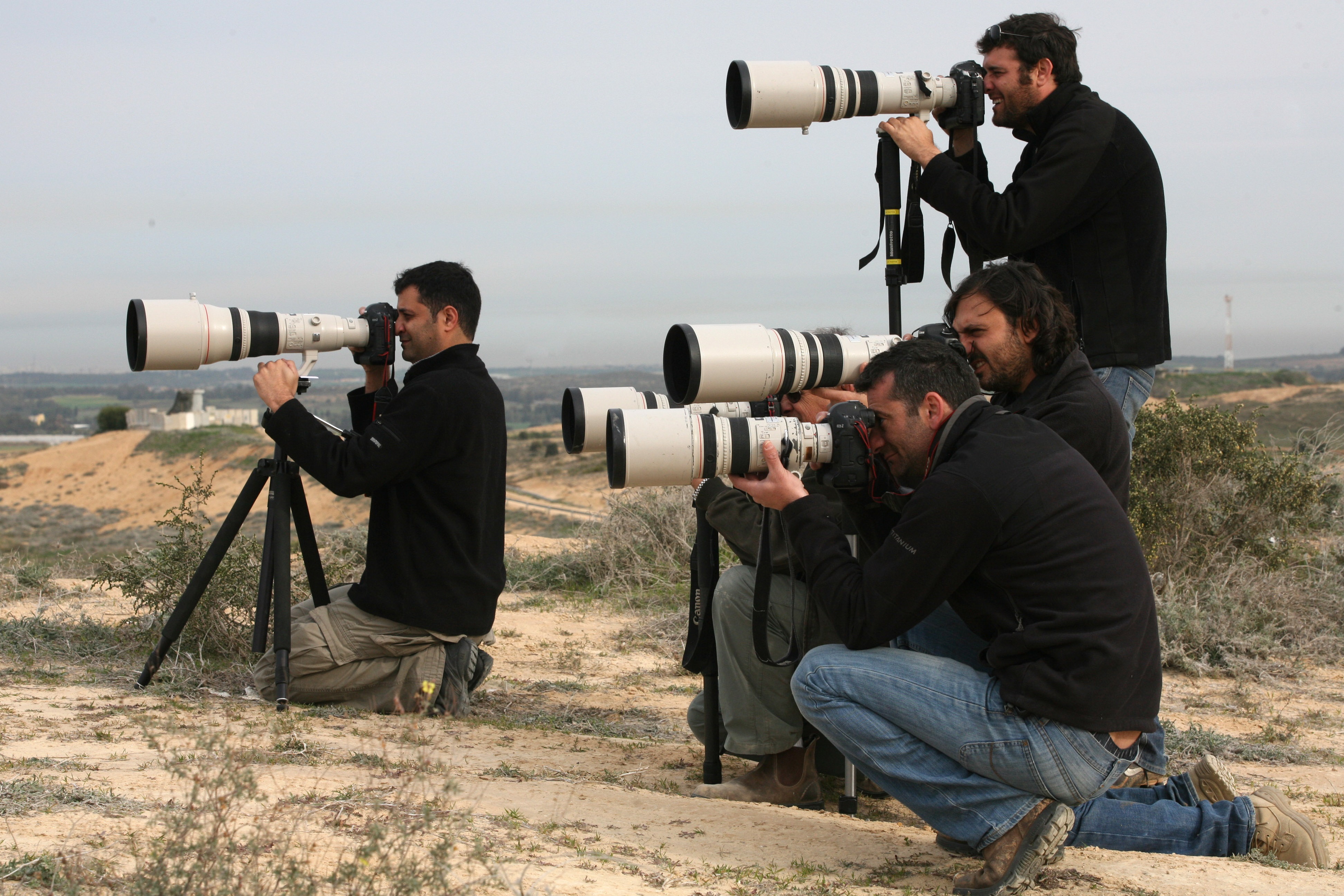
Photojournalists take pictures as the IDF operates inside the Gaza Strip during Operation Cast Lead. Photo: Kobi Gideon / Flash90

Let’s proceed like this: I will draw on my four decades as a foreign correspondent in this region, telling you how it works, giving some examples — but I will not tell you exactly who is involved, and I may take some steps to cover their tracks. So don’t try to figure it out.

This is the main factor, for better or worse, and it’s clearly both: News organizations make the safety of their reporters their top priority. Whatever it takes to keep them out of harm’s way — that’s what is done. I applaud that and I support that, though everyone understands that the policy can be and is exploited by tyrannical regimes to your detriment.

For example, in 2001, a news agency refused to release video it had of Palestinians celebrating the 9/11 attacks because Palestinian militants threatened the photographer and his family with murder. It was what is called a credible threat. The news agency took considerable heat for its decision to suppress the video but stood by its decision, depriving the world of the visual documentation of an important development.


The drive to protect reporters runs the entire range from serious to silly. Fearing injury to its staffers from rocks thrown by Palestinians and Israeli army gunfire, news organizations imported armored cars to drive around the West Bank and Gaza. They cost a fortune and kept breaking down. Then they allowed reporters and photographers to drive around the West Bank in their own cars — but they had to wear helmets. Plastic bicycle helmets. That’s the silly part.


Here’s the serious part. A typical news report from Gaza a few days ago described the destruction, interviewed Gaza civilians who related in heartbreaking detail the deaths of their relatives and loss of their belongings, and listed the hardships and travail the people are facing because of the Israeli military operation. Halfway through the long story was a single paragraph that said that Israel claims Hamas fires rockets from civilian areas. This is how journalists protect themselves from charges that they didn’t tell “the other side.”

But in fact, they didn’t. They didn’t report from Gaza about where the Hamas rocket launchers were, where the ammunition is stored, where the openings of the tunnels are—if they mention the tunnels at all, which in this case, they didn’t.


A reporter for a European news outlet told a friend that he saw Hamas gunmen firing rockets from outside his hotel, but he didn’t take pictures, certain that if he had, they would have killed him. He told the tale only after he was safely out of Gaza. Apparently his news outlet did not have a permanent local stringer there, or he would not have been able to speak even from the relative safety of Tel Aviv without endangering his stringer.

News agencies, newspapers and TV networks use their local Palestinian stringers to do most of the work on the ground. In this era of cutbacks in my industry, there aren’t enough reporters, and those they send in are not fluent in Arabic and don’t know their way around.


Besides the budgetary limitations, news organizations often hesitate to send reporters into Gaza at all because of the constant danger, and not from Israeli airstrikes. In 2007, BBC reporter Alan Johnston was kidnapped by Palestinian militants and held for more than three months. Many other foreign journalists were kidnapped there and held for a day or two around that time. There have been no kidnappings recently, but the message was clear—foreigners are fair game. The message was heard and understood. For lack of an alternative, news organizations began to rely more and more on local stringers, giving the regime considerable leverage through intimidation. It’s expected that news organizations will deny all this—it’s part of the dance.

On many occasions, frightened stringers have pleaded to have their bylines taken off stories. Some have been “evacuated” from Gaza for a time for their own safety, after an article critical of the regime was published or broadcast. Families have been spirited out for a while.

So when the stringer returns home and gets back to work, it’s pretty clear how he’ll behave. Everyone in the home office knows that and accepts it.

The West Bank, run by the relatively moderate Fatah, is no better than Gaza’s Hamas in this regard.

Back in 2000, two Israeli reserve soldiers bumbled their way into Ramallah, where they were lynched and murdered by a mob. The grisly photo of a Palestinian holding up his bloodstained hands proudly from a second-story window after the bodies of the soldiers were thrown out is seared into the memories of Israelis. Yet an Italian TV network felt the need to apologize in public for the fact that there was video of the horrendous event — explaining pitifully that a rival network was responsible, and that they would never do anything that could reflect badly on the Palestinian Authority. That was a rare public glimpse into how “journalism” works in such places.


Sometimes even the best are turned. A Palestinian reporter duly relayed an official Palestinian story from an Israeli army roadblock near Ramallah in the West Bank, where a pregnant woman had died after heartless Israeli soldiers refused to let her go through to the hospital. The reporter went to the hospital, where a doctor confirmed the report. Uneasy, the reporter climbed on foot to the primitive encampment where the woman lived, and there, her husband refuted the whole story. The delay, he said, was getting her to the main road and finding a taxi. Once they got to the roadblock, he said, the soldiers cleared everyone else out of the way and sped them through to the hospital—but it was too late. The reporter then confronted the doctor, who admitted that he lied “for the cause.”


A decade or so later, this same reporter, like others, refused to touch a story of a Palestinian whistleblower, appointed by President Mahmoud Abbas himself to find evidence of corruption in the PA. He did his job too well, it seems—he was fired, but not before he said he took with him 40 boxes of incriminating documents, possibly answering the question of where those billions of dollars and euros of aid to the Palestinians has gone. The whistleblower approached several reporters, but no story was done until a local Israeli TV channel broadcast a report, and to the best of my knowledge, no serious examination of the documents has been undertaken.

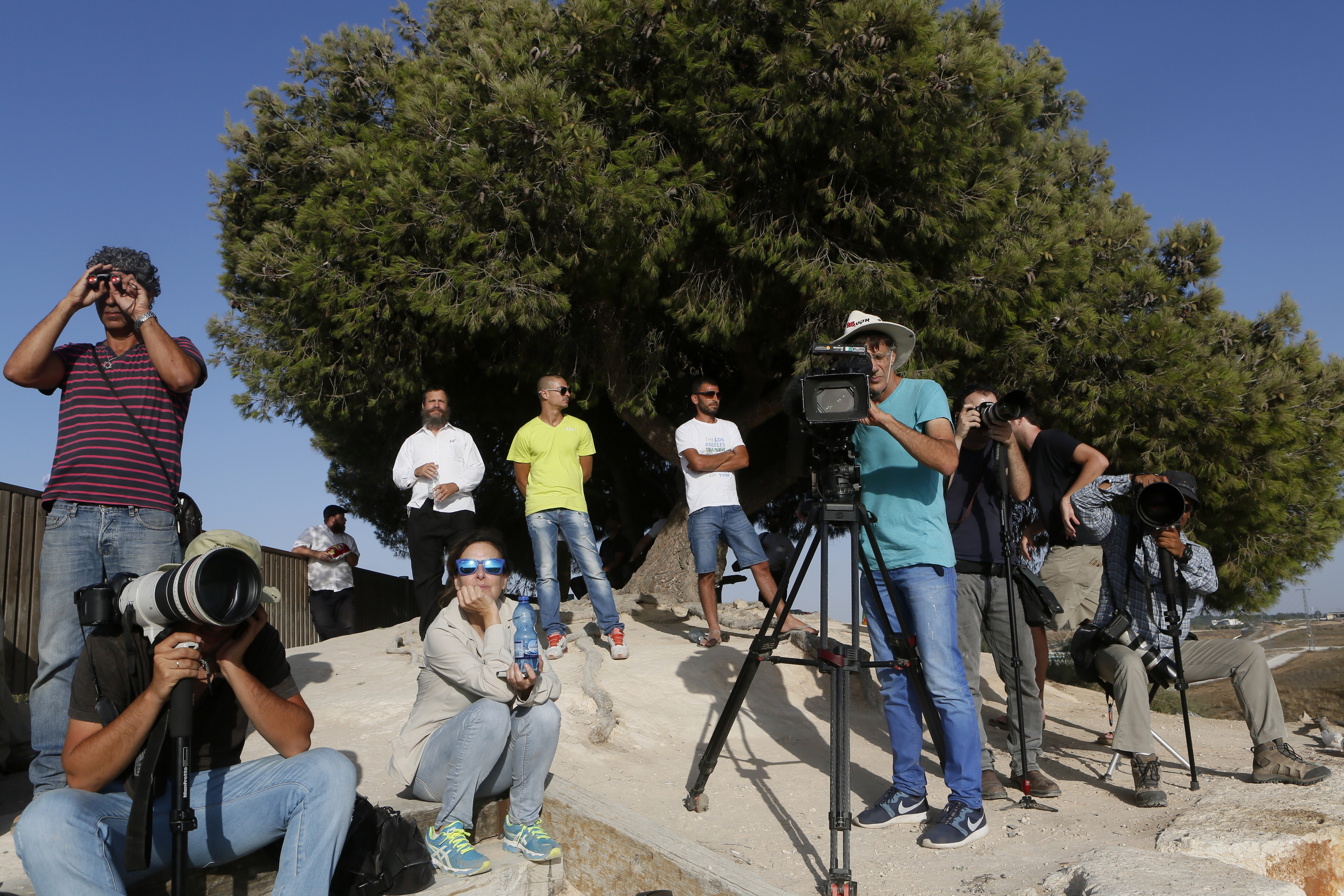
Israelis and journalists stand on a hill overlooking the Gaza Strip observing military activites on the sixth day of Operation Protective Edge, July 13, 2014. Photo: Miriam Alster / Flash90

It could be that over the years, that reporter was won over to the righteousness of the Palestinian cause, refusing to do any stories that reflected badly on his fellow Palestinians. Or it could be that he realized that if he did such stories, he would be cut off from his sources. Or worse.

That is part of what’s going on in Gaza today. For as long as I’ve been dealing with Gaza, local Palestinian reporters have affiliated themselves with the side considered to be the strongest. At first, that was Fatah.

It started changing after the first intifada erupted in 1987, when Hamas emerged as a power. For example, the stringer for two major Western news outlets always managed to get the Hamas statements and leaflets in Gaza before anyone else. The leaflets were a key source of information about the new, radical, violent Islamic group. I eventually figured out why he was always first—Hamas was giving him the leaflets to translate into English, and then he’d pass them on to his clients.

One particular news outlet always got the suicide bomber videos first. Those were the farewell diatribes recorded by Hamas terrorists about to embark on a mission to blow themselves up in Israel. It emerged that the camera crew that worked for the news outlet was the same one filming the statements.

Those are examples of local reporters choosing sides out of both ideology and self-preservation.

Clearly the abuse of reporters and perversion of journalism is not unique to Gaza or the West Bank. This is the situation all over the region save Israel. During my two years in Egypt, I saw some of my colleagues beaten, harassed and arrested. The military-backed Egyptian regime jailed reporters for Al-Jazeera last December, charging them with belonging to or assisting a terrorist organization. Three, including Australian Peter Greste and bureau chief Mohamed Fahmy, a Canadian-Egyptian, have been sentenced to seven to ten years in prison.

Some moves are quieter. A news outlet pulled its photographer out of Saudi Arabia, because the regime would not allow him to take pictures of anything. Local reporters steer very clear of controversial subjects. So one of the most important nations in the Middle East, and arguably the world, is not covered properly, because the regime won’t allow it.

We do get some news out of Iran, but local reporters there are pretty much confined to rewriting official news releases and interviewing government officials. Iran gives press credentials sparingly, if at all, and if a reporter is expelled, as many are, his news agency can’t replace him. So the choice is, either milquetoast official news or no news at all.


Both Syria’s government and some rebel groups operating there kidnap and kill journalists in the worst case, and severely restrict their movements in the best case. Much of the “news” coming out of Syria is in the form of video clips made by one side or the other. Some are so clearly fake that they are almost humorous—almost, because an obviously staged video of “Syrian soldiers” burying rebels alive is not exactly the stuff of stand-up comedy. Needless to say, local Syrian stringers walk a very careful line, and some just disappear for weeks on end when things get too dicey.

Journalists, of course, won’t tell you what you’re missing in the coverage. Their anchors or editors won’t tell you why large parts of the story are colored a certain way or taken from a certain angle. They don’t want to put their reporters’ lives at risk.


This is the main reason that video and pictures seem to flow freely out of Gaza. But critical elements of the story itself can’t, and neither can all the pictures and video. It gives the impression that the story is being covered, when only part of it—sometimes a small part—is being covered.

All we can do is keep this in mind: the world does not operate according to our democratic standards of freedom of the press. What we see may not be the whole truth. In fact, you can be sure it isn’t.

And then there’s Israel. It has the freest, most irreverent press in the region, which, granted, isn’t saying much. Israeli newspapers reflect the wide range of political views, and that is wide, indeed. One newspaper clamors for an end to the conflict in Gaza, while next to it on the news stand is a paper insisting that the operation must continue until Hamas is “utterly destroyed,” using a chilling biblical term.
 

But Israel, some might point out, has that frightful and undemocratic military censorship. The military decides what can be printed and what cannot. The status quo is so horrible that most news outlets reporting from Israel feel the need to inform their readers or viewers each time a story is submitted to the censor, and whether or not it’s been altered as a result.

Censorship can be excused in a nation that’s at war, but in the age of instant communications, Israeli censorship has run its course. Not that it’s unjustified—it just doesn’t work anymore. It’s too easy to circumvent the censor and publish anything you want on the Internet.


The fact of censorship probably does Israel more harm than good, precisely because it appears as if the government is controlling news. In practical terms, it doesn’t. Censorship applies to military operations in progress, as well as a list of items deemed to be matters of national security. In practice, military operations in progress are live-blogged, live-tweeted and live-broadcast all the time now, and there’s nothing the military can do about it, so why continue the effort?

On the other hand, the opposite argument can be made. It’s not that Israeli censorship actually limits the news coming out of here. The very fact that it’s considered necessary shows how free the news media are.


It’s a sharp contrast to the rest of the region, where there’s no need for censorship. Brutal intimidation and threats against reporters are so much more effective.


Banner Photo: Aviram Valdman / The Tower 


De kosten van het tunnelnetwerk van Hamas in Gaza

 
Er is veel te doen om de armoede en uitzichtloosheid in Gaza. Weinig journalisten merken op hoezeer Hamas daar zelf aan heeft bijgedragen. Terwijl Gazanen met afstand de meeste internationale hulp krijgen (in vergelijking met andere derde wereld landen/volken) verdwijnt veel geld in de terroristische infrastructuur van Hamas. Zolang Hamas zo makkelijk hulpgelden en spullen kan misbruiken voor eigen doeleinden, is het onmogelijk de mensen echt te helpen en onredelijk te eisen dat Israel alles doorlaat. Alleen een waterdicht controle systeem (waarbij organisaties als UNRWA niet perse vertrouwd kunnen worden omdat ze dicht bij Hamas staan en veel Hamas leden in dienst hebben) kan uitkomst bieden. Dit is niet alleen in Israels belang, maar vooral ook in dat van de gewone Gazaan die liever ziet dat constructiemateriaal gebruikt wordt voor de herbouw van zijn huis, gemeenschapscentrum, moskee etc. (die allen door Hamas werden misbruikt voor de strijd tegen Israel) dan voor nieuwe tunnels en bunkers.
 
De prijs van een Hamas tunnel:
Een tunnel is 350 vrachtwagens met bouwmateriaal.
Daarmee kon Hamas 86 huizen hebben gebouwd, 7 moskeeën, 6 scholen en 19 gezondheidsklinieken.
Iedere tunnel kost 3 miljoen dollar.
Er zijn 30 tunnels gevonden, dus dat is 90 miljoen dollar.
 
------------------
 

The Price of Hamas’ Underground Terror Network

Published on: July 26, 2014

http://www.idfblog.com/blog/2014/07/26/price-hamas-underground-terror-network/


Hamas could be investing in the people of Gaza. Instead it invests in terrorism.
 
Construction materials meant for Palestinians routinely enter Gaza from Israel. To be exact, 4,680 trucks carrying 181 thousand tons of gravel, iron, cement, wood and other supplies have passed through the Kerem Shalom crossing since the beginning of 2014.
 
Imagine what Hamas could build with these resources instead of tunnels. Hundreds of homes and civilian structures for the residents of Gaza go unbuilt while the underground terror networkcontinues to expand.
 
Hamas’ first priority is killing Israelis. The people of Gaza and the people of Israel suffer because of this.